
Carmel Resident Records
A single Carmel name inquiry does not produce one official master record. Carmel tax and parcel materials, a Carmel court index, an archival vital index, a New York voter self-lookup, and credential or entity systems answer different questions. Start with the Carmel record that uses the identifier already known. Then compare Carmel dates, place labels, and roles before connecting the results to one person. A tax owner, a court party, a professional licensee, and an historical event subject are separate record roles.
| Record | What It Confirms | Where | Access |
|---|---|---|---|
| Tax bill or assessment roll | Dated owner of record, mailing recipient, property address, parcel, class, and values | Putnam Real Property and Carmel tax route | Public fields vary by year; owner is not necessarily occupant |
| Voter self-lookup | A person’s registration status and polling information | New York Voter Lookup | Self-check tool with statutory use and confidentiality limits |
| Court index | Public party role, case number, type, date, and status where included | Carmel Town Court, eCourts, or NYSCEF | Some matters or documents are absent, sealed, or restricted |
| Vital index | Historical event and certificate-number lead | New York State Archives and DOH | Index is not a certificate; copies have eligibility rules |
| Credential or entity record | Public professional credential or legal business affiliation | NYSED or New York Department of State | Practice or service location is not a home address |
For a Carmel historical family question, start with the event year and the Carmel archives index. For a Carmel property connection, keep the roll year, tax map, mailing line, and situs address separate. When only a name is known, normalize initials, suffixes, apostrophes, former names, and spelling variants before using a second Carmel record.
Anchoring Carmel Resident Records
The most concrete Carmel starting point is often the dated Carmel tax or parcel record. The Town of Carmel tax search accepts bill number, tax-map number, and property address, while the county’s documented tax portal supports property ID, owner name, property address, and billing address. The Carmel address instruction is to omit the street suffix. County results can use exact, partial, or wildcard patterns and are limited to 400 results. The Carmel record year must stay attached to any result.
The 2025 official Carmel tax-bill sample demonstrates the useful Carmel fields: bill and account identification, tax map, property location, municipality, property class, school district, values, owner names, mailing address, and itemized tax lines. It proves the Carmel layout for that bill year only. It does not make an owner name a claim of current occupancy, and a Carmel mailing recipient may differ from the property location.
| Tax map or parcel | Identifies the parcel record and helps distinguish same-name owners. |
|---|---|
| Owner as printed | A dated ownership role, not a universal residence claim. |
| Mailing and situs lines | Keep them separate, including the original Carmel or Mahopac postal label. |
| Roll or bill year | Shows when the statement applied and prevents a stale result from looking current. |
Use GIS or a recorded instrument only to test the parcel connection. A historical city directory may add an older name or community context, but it needs its own source year and should not be merged with a current tax record without independent support.
Carmel Resident Voter Limits
The official New York voter lookup is a self-service registration-status and polling-place tool, not a public export. Its visible controls require county, last name, first name, date of birth in MM/DD/YYYY format, ZIP Code, address information, and Search. It requires cookies and JavaScript. Use it only for the person’s own Carmel registration and Carmel polling information, not as a way to collect a Carmel name list.
New York Election Law sections 3-220, 5-602, 5-508, and 5-614 govern public voter fields, permitted handling, and confidential-voter protections. Driver-license and non-driver-ID data, Social Security information, and facsimile signatures are not public. The Putnam County Board of Elections is the Carmel county route for Carmel district questions and registration procedures. The Carmel election map shows districts 1 through 30, but Carmel district and polling information should carry an election year.
Note: A voter portal result can change through official maintenance and does not show a person’s ballot choices or a general residency history.
Checking Carmel Resident Court Records
Carmel Town Court, at 60 McAlpin Avenue in Mahopac, is the local court route, but its public court page does not provide a complete local name docket. Contact the clerk with a case number, party name, approximate date, and case type, then ask about inspection, copies, and confidentiality. Putnam Supreme and County Court, Surrogate’s Court, and Family Court services have different functions and access rules. A local-court question should not be forced into a statewide portal.
The eCourts hub links WebCivil Local, WebCivil Supreme, WebCriminal, and WebFamily. NYSCEF has separate public e-filed-matter search modes for a Carmel court inquiry. Its documented choices include full case identifier, case number and year, attorney file number, third-party index number, party or attorney name, business or organization name, first and last name, and, for Tax Cert or SCAR matters, Block and Lot. Carmel county, case type, and filing-date range can narrow Carmel results.
NYSCEF documents the search fields and result structure used for this Carmel court-record route.
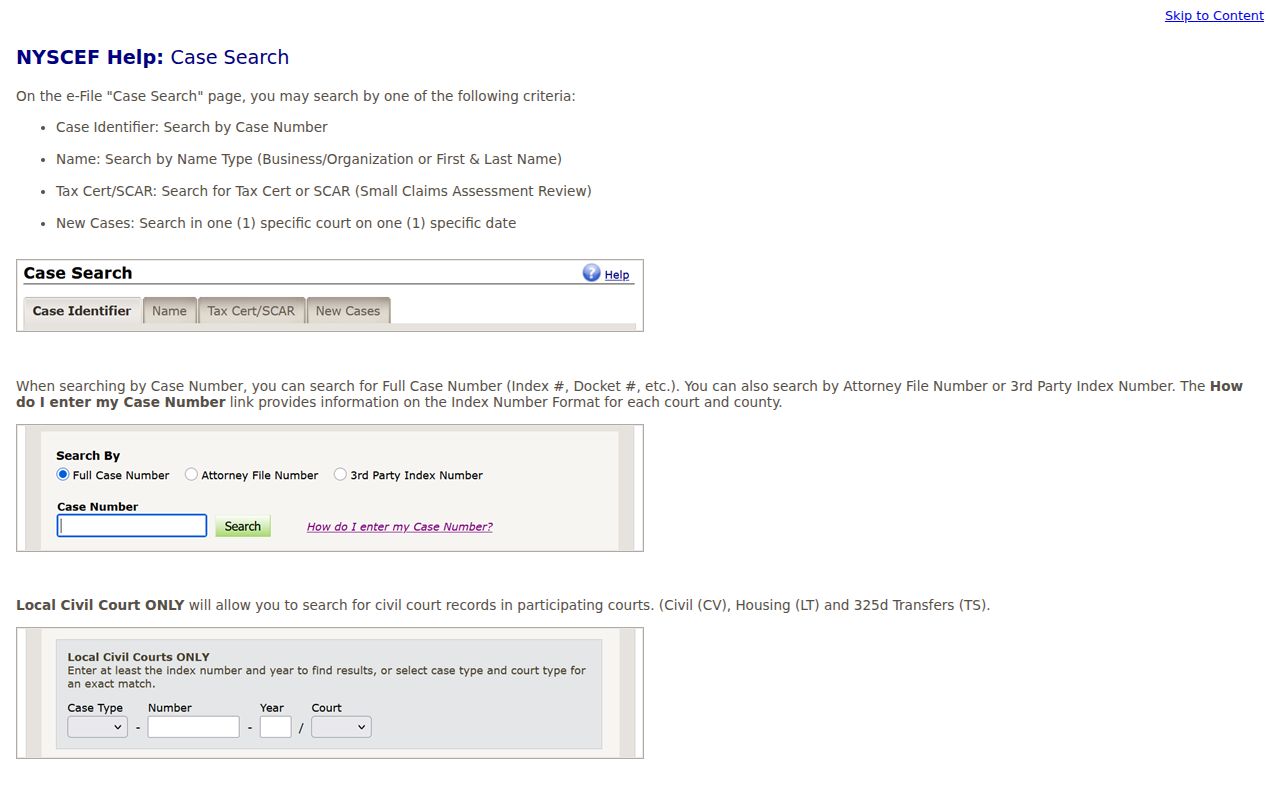
A Carmel result can show the indexed party or attorney name, case number, case type, county, filing date, status or disposition, attorney information, and links to e-filed documents where available.
A no-result should be described as “not located in this portal.” It can reflect a sealed or confidential matter, a delayed entry, a wrong court system, or an out-of-scope case. A public party name does not establish liability, guilt, or residence.
Carmel Resident Vital Indexes
New York State Department of Health vital records are the current route for Carmel births, Carmel marriages, and Carmel deaths outside New York City, while the State Archives provides historical indexes rather than ordinary certified certificates. The documented Archives index coverage is births 1881-1937, marriages 1881-1960, and deaths 1880-1960. A Carmel hit can provide names, event date and place, and certificate number. It is a next step, not permission to publish a Carmel certificate.
DOH genealogy copies are generally available after 75 years for a birth when the person is known deceased, after 50 years for a marriage when both spouses are known deceased, and after 50 years for a death. Direct-line proof may support eligible requests inside those periods. DOH’s genealogy search starts at $22 for a one-to-three-year search, and processing can take eight months or longer. A local registrar may be a faster eligible route. The Town Clerk or local registrar can be reached through the Carmel staff directory.
Divorce files are court records, not standard DOH vital certificates. Adoption records are confidential under the stated New York laws and belong with the official DOH adoption information route, which offers non-identifying information and registry or reunion pathways.
Verifying a Carmel Resident
A good Carmel identity check preserves the original spelling while adding normalized search keys. Use a Carmel time anchor and a Carmel place anchor before considering a name match. For a common Carmel name, require three independent anchors. The goal is to determine whether two Carmel records concern the same historical or public-record subject, not to construct a profile from unrelated fragments.
- Record the exact name, middle initial, suffix, former name, punctuation, and source spelling.
- Choose a time anchor, such as a tax year, filing date, license-status date, directory year, or event year.
- Choose a place anchor, such as a tax map, full address, postal city and ZIP, court county, election district, or historical hamlet.
- Compare at least two independent records. For a common name, use three, such as name plus parcel plus mailing address, or name plus court index plus entity identifier.
- Ask the custodian only about procedure, indexing, copy requirements, or the identifier needed for a lawful request.
- Docket
- A court’s indexed case record, usually organized around a case or index number and procedural events. It is not a full personal history.
- Index versus image
- An index points to a record or supplies fields for it; an image is the underlying page when access is permitted. Neither guarantees unrestricted copying.
- Certified copy
- A copy issued by the record custodian with certification. An online result or a screen print is not automatically certified.
Preserve a negative result too. An absent eCourts, DOCCS, tax, or historical-index match can result from spelling, coverage, restriction, or the wrong database. It is not proof of a negative fact about the person.
Carmel Resident Credential Records
Public New York entity and credential systems can verify a limited Carmel role, but neither is a Carmel person directory. The New York Department of State entity database can show an entity name, organization date, jurisdiction, county, service-of-process address, registered agent, status, and sometimes principal business location. Older Carmel corporate history has coverage limits. A Carmel service address is a legal contact, not a person’s residence.
New York State Education Department’s verification search works one profession at a time. Search by at least three letters of a last name, optionally followed by first name, or by profession and license number. Results can include name, profession, license number, location, original license date, registration status, and disciplinary summaries from January 1994. Try documented Mc, O’, and punctuation variations when needed.
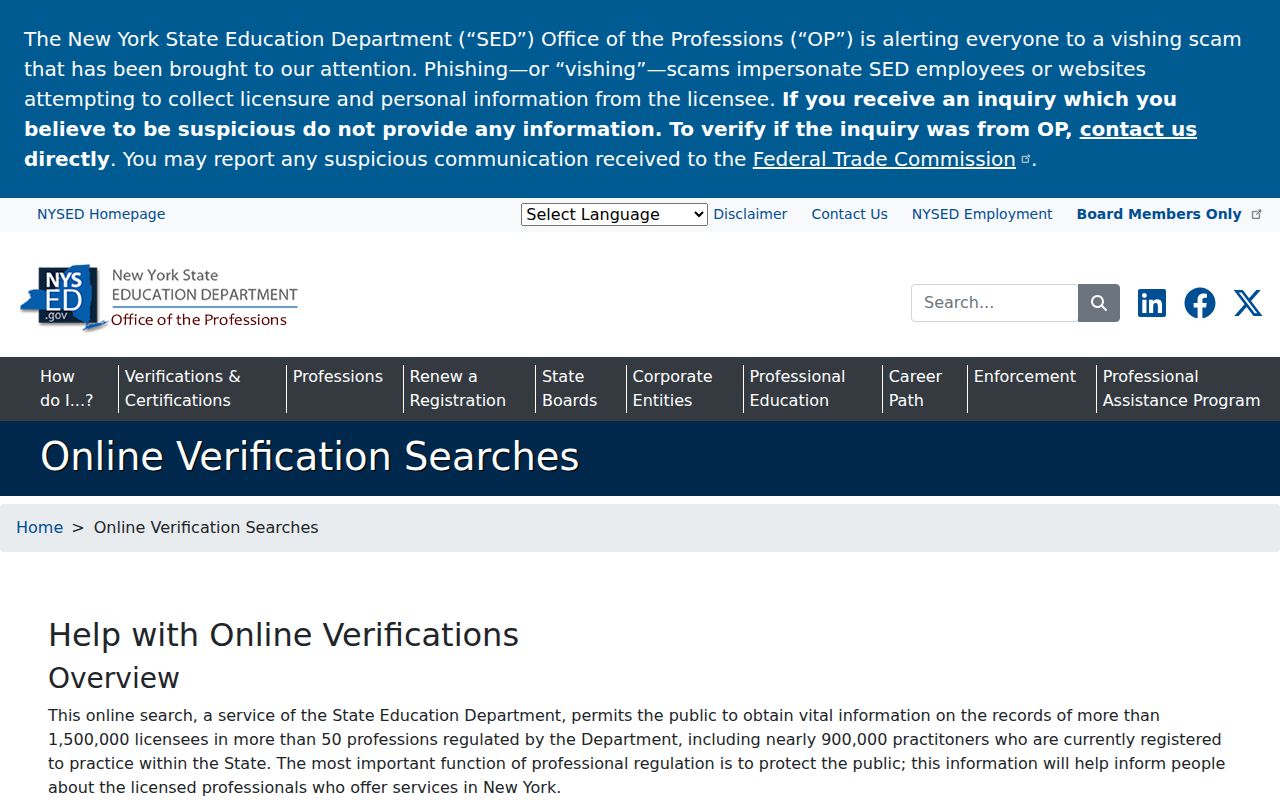
The result should retain the profession, credential number, status, source date, and whether the printed location is a professional location rather than a home.
Carmel Resident State Systems
Sensitive Carmel state-system results need careful Carmel identity matching and a Carmel retrieval date. The official New York DOCCS lookup provides DIN searching and last-name plus birth-year routes, with exact or partial last-name options. It does not use Soundex. The public database covers current and former state-custody records from approximately the early 1970s, subject to exclusions. Carmel results can include DIN, name, status, facility, and release-related information.
The DOCCS lookup is the official source for this Carmel state-record reference image.
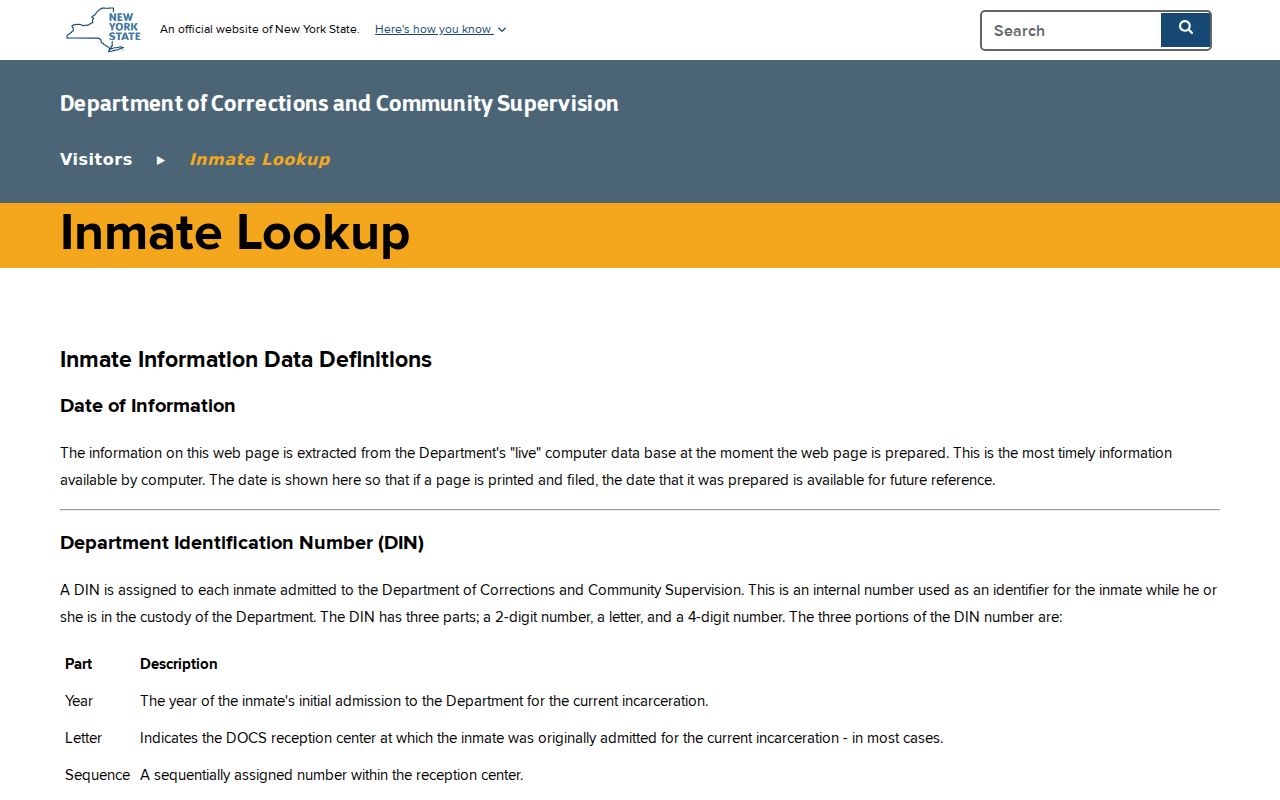
A no-result can reflect a spelling or birth-year mismatch, an excluded category, or no match. It cannot prove that a person has never been in state custody. No public live Putnam County jail roster was located; use the Sheriff’s FOIL or contact route for a defined lawful request.
The New York State Sex Offender Registry has last-name, county, and ZIP modes with CAPTCHA and exclusion or custody controls. Online public information is limited to Level 2 and Level 3 records; Level 1 information has a telephone route. Follow the registry’s stated anti-misuse warning and never guess at identity from a similar name.
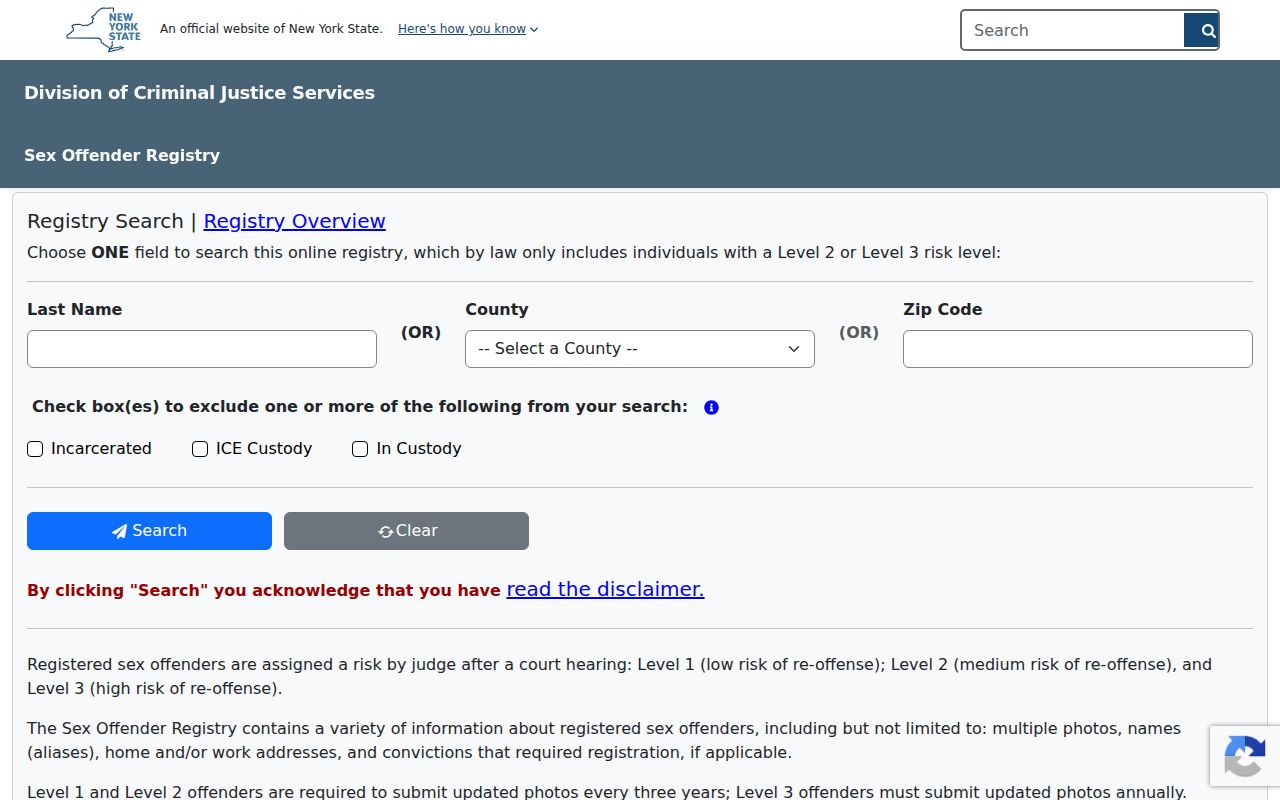
The registry’s public fields and status are controlled by that official system, so results require the exact source date and the portal’s own limits.
Carmel Resident Privacy Limits
New York Freedom of Information Law, Public Officers Law Article 6, requires a Carmel request to reasonably describe Carmel records and reach the right agency or Records Access Officer. If a portal stops short, ask the County Clerk for a defined land instrument, the court clerk for a case-file process, the Town Building Department for a specific Carmel property file, or the Historian or library for a named Carmel collection. Keep the request, acknowledgment, fee notice, production or denial, and any appeal. Agencies may redact exempt fields.
Protected voter records under Election Law section 5-508, the New York Address Confidentiality Program, adoption files, sealed court matters, juvenile records, and protected-family information must remain suppressed. The Address Confidentiality Program provides a substitute mailing address and mail forwarding for eligible people; an address that appears elsewhere must not be used to defeat that protection. Motor-vehicle personal information has separate federal restrictions.
Lawful use. A Carmel resident record inquiry is for personal, lawful research. Do not use record information to stalk, harass, threaten, or harm anyone, and report a protected-address exposure to the responsible custodian.
Source dates, record dates, retrieval dates, and a statement of what the record means make a Carmel result more reliable. A correction request can address a Carmel transcription error, stale portal content, wrong-person match, broken link, or protected exposure without demanding sensitive details from the requester.