
Finding Carmel Residents from a Record
A Carmel residents directory search goes smoothly when the first lookup matches the record in hand. Start with what the record actually is. A street address belongs in the Town tax search or the county property route. A parcel or tax-map number is stronger still. It survives spelling changes over the years. For a historical name, pick a directory, newspaper, census, or archive source. Pair it with the year it covers. A court or business result can establish a dated role for someone. It proves nothing about where that person lived. The Town of Carmel is also a legal municipality that carries more than one postal label. Copy the city line exactly as the source prints it.
Property records answer ownership questions. They identify owners, billing recipients, and parcel locations. They do not list every person at an address. The state voter tool serves as a person's own registration and polling-place check. It is not a bulk resident roll. A County Clerk deed names the parties to a recorded instrument. A historical publication preserves only what was printed at that time. Because of these differences, a second independent source matters. Two similar names should not be treated as one Carmel person without it.
- Begin with the narrowest stable item: tax map, property address, case number, event year, or complete name.
- Use the Carmel tax search or Putnam County property resources to capture the record year, parcel, owner role, and situs address.
- Compare that result with a second official or historical source that has its own date and identifier.
- For a missing land record, use the County Clerk land-record route or ask about the record-room appointment process.
- When a collection is not online, send a focused request to the correct clerk, department, library, or archive.
Carmel and Mahopac Address Labels
Postal place and town boundary are separate parts of a Carmel residents directory record. The ZIP code splits two ways. Official postal materials tie 10512 to Carmel and 10541 to Mahopac. Town Hall itself carries a Mahopac mailing address. The County Office Building uses a Carmel one. Neither line alone settles the legal municipality for every parcel. Use the USPS address lookup to confirm the delivery label. Then turn to the tax map or parcel record for municipal context.
- Postal city
- The city name assigned for mail delivery, such as Carmel or Mahopac.
- Municipality
- The legal town or other government area shown by the parcel, map, or official record.
- Situs address
- The physical property location used on a tax record. It can differ from the mailing address.
- Tax-map parcel
- The mapped parcel identifier that ties a location to county assessment and land records.
Address variants deserve care in every Carmel lookup. The Carmel tax portal asks you to omit the street suffix. Older county help describes partial and wildcard patterns. Keep apartment, directional, and road text exactly as printed whenever a source shows it.
Reading a Carmel Tax Record
The Town tax portal offers fields for bill number, tax-map number, and property address. A 2025 official bill for Carmel shows the layout. It lists bill or account identification, tax map, property location, municipality, class, school district, owner as printed, mailing address, value fields, and tax details. Those labels answer different questions. A tax bill is dated evidence about the bill year. It is not a household roster.
Putnam County Real Property also links current rolls, Beacon, property-card guidance, and annual roll material. The older county help lists four search modes. These are Property ID, Owner Name, Property Address, and Billing Address. Exact, partial, and wildcard patterns are all permitted, but results stop at 400. When a name returns too much, narrow it with the tax map. The owner's exact spelling also works.
| Tax-record field | What it means |
|---|---|
| Owner as printed | The owner name carried on that year’s roll or bill. |
| Mailing address | Where the bill was sent, which may be away from the parcel. |
| Property location | The situs address associated with the parcel. |
| Tax map and roll year | The identifiers needed to re-find the dated record. |
Note: A mailing recipient or tax owner should not be treated as a current resident without separate, dated support.
Carmel Offices Behind Resident Records
Each office keeps a different layer of the Carmel record trail. The Putnam County Clerk maintains recorded land instruments, maps, judgment and lien dockets, civil and criminal papers, business certificates, and county FOIL routing. The Real Property Tax Service Agency supplies county property and roll resources. The Town Receiver of Taxes handles the Carmel tax-bill route. The Town Clerk and municipal departments route town records. The County Historian rounds out the picture with archives, newspapers, maps, census material, family files, and church or cemetery collections for historical context.
Putnam County Clerk
40 Gleneida Avenue, Room 100
Carmel, NY 10512
845-808-1142
The property, parcel, and deed chain gets fuller treatment in the Carmel street directory. A general FOIL request is not the first move. Skip it when the source is already public online. Skip it when the record sits at a specific counter. Direct any request to the office that created the record.
Carmel Parcel and Deed Trails
A property location can lead from the Town tax bill to a county roll and a GIS parcel. It may end at a County Clerk instrument. The deed names grantor and grantee. It carries recording and execution dates. It also lists a legal description and a book-page or instrument reference where those fields appear. It does not guarantee every occupant or beneficial interest. SearchIQS offers a guest landing route. But the official source describes no deeper fields or historical coverage there. The County Clerk record room and its appointment process remain the documented fallback.
The County property page links current roll resources. The GIS inventory documents parcel, sales, address, road, aerial, district, and water layers. Search a Tax ID and choose the parcel. Then open the map information box to check municipality, acreage, and address. Confirm critical facts against the roll or the Clerk record. Map layers and data dates differ. The Putnam County Clerk page is the source for this land-record and public-record access view.
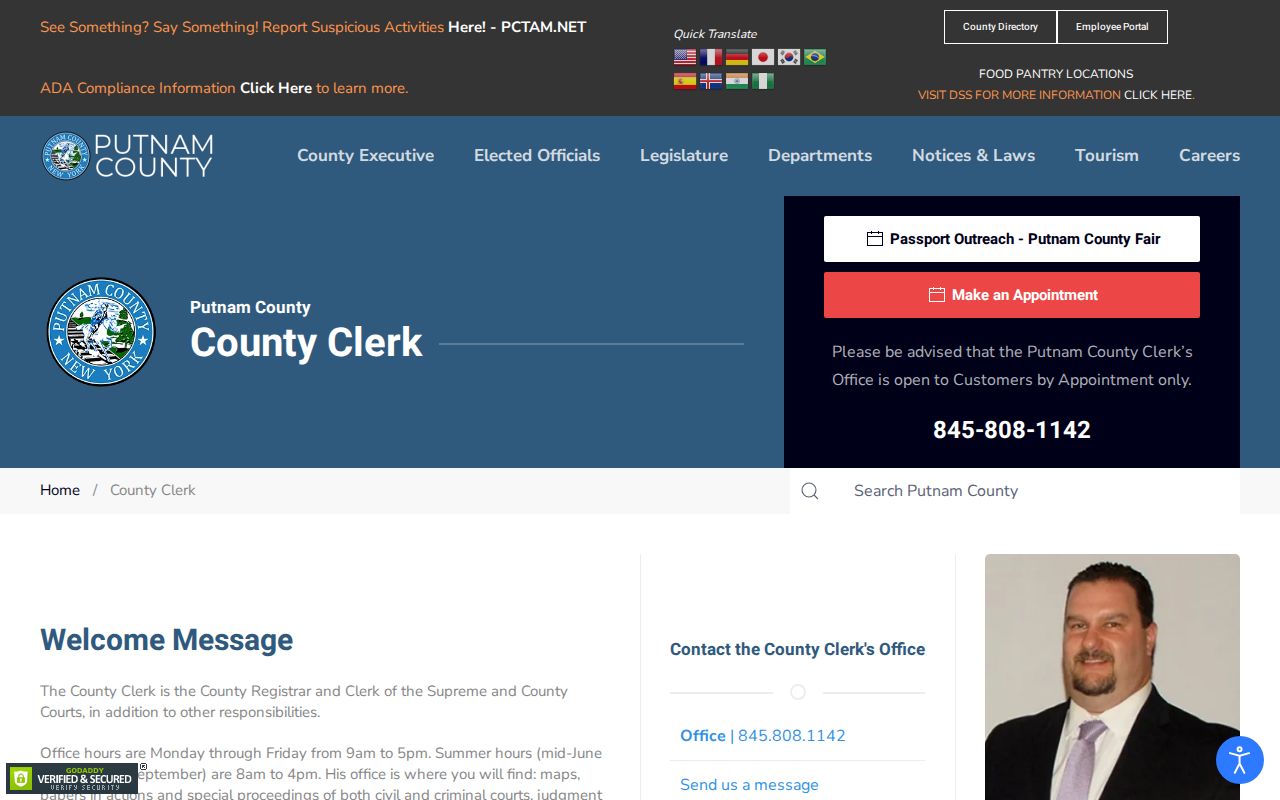
The County Clerk image shows the land-record, copy, and public-record paths that back a parcel-based search in the Carmel residents directory.
Carmel Voter and District Boundaries
New York's voter lookup works one voter at a time. It asks for county, last name, first name, date of birth, ZIP Code, and address details before returning registration and polling information. It offers no street-wide export. Putnam County's Board of Elections handles local registration and district questions, and the official Carmel election map displays Election Districts 1 through 30. Pin down the election year as well. District boundaries and polling places can change between cycles.
| Field | Format | Use |
|---|---|---|
| County | Required selection | Sets the local election jurisdiction. |
| Name | Last and first name | Identifies the person using the self-service form. |
| Date of birth | MM/DD/YYYY | Required identity detail for the official lookup. |
| ZIP and address | Address information | Supports a person’s own registration and polling check. |
New York Election Law restricts voter-record use. Driver-license, Social Security, signature, and confidential-voter details stay protected. The state Address Confidentiality Program is one more reason a similar name in a public source never justifies republishing someone's address.
Current Carmel Resident Directory Sources
No single official list covers everyone in Carmel. Each current source records a role instead. The voter lookup gives one voter's own registration and polling information under Election Law limits. A tax roll records owner, mailing recipient, and parcel. A deed index names transaction parties. A professional or business result can document a public credential or a legal business contact. Label the role and the source date rather than stretching any entry into a claim that someone lives at an address today.
| Source | Who It Lists | Keeper | Access |
|---|---|---|---|
| Carmel tax bill and county roll | Dated owner, billing recipient, parcel | Receiver of Taxes / Real Property | Portal, PDF roll, counter |
| New York voter lookup | Individual registration and polling status | State / Putnam BOE | Self-lookup, restricted use |
| County Clerk instruments | Recorded grantor, grantee, or party | Putnam County Clerk | Guest route, record room, copies |
| State entity and license records | Public business or credential role | NY DOS / NYSED | Official online lookup |
| Town staff directory | Public work contacts | Town of Carmel | Free official directory |
When one name needs careful checking, the Carmel resident lookup route compares independent, dated sources. A service address is not occupancy. Neither is a historical entry or an owner label. The comparison keeps each piece of evidence honest about what it actually proves.
Carmel Courts, Vital Indexes, and Names
Match the record holder to the question. The Carmel Town Court page gives a local clerk route, and the court itself publishes no public local name-search form. For qualifying case types, New York's eCourts and NYSCEF systems may supply a party role, case number, case type, filing date, status or disposition, and linked e-file documents. A missing result can mean many things. Sealing, delayed entry, a wrong portal, or scope limits can all hide a case. Certified files come from the court clerk.
For historical life events, the New York State Archives holds indexes rather than ordinary certificates. Births run 1881–1937, marriages 1881–1960, and deaths 1880–1960. Keep any certificate number for the next step. An index hit is not an unrestricted certificate. The New York Department of Health genealogy guidance explains the Department of Health rules on copies and eligibility.
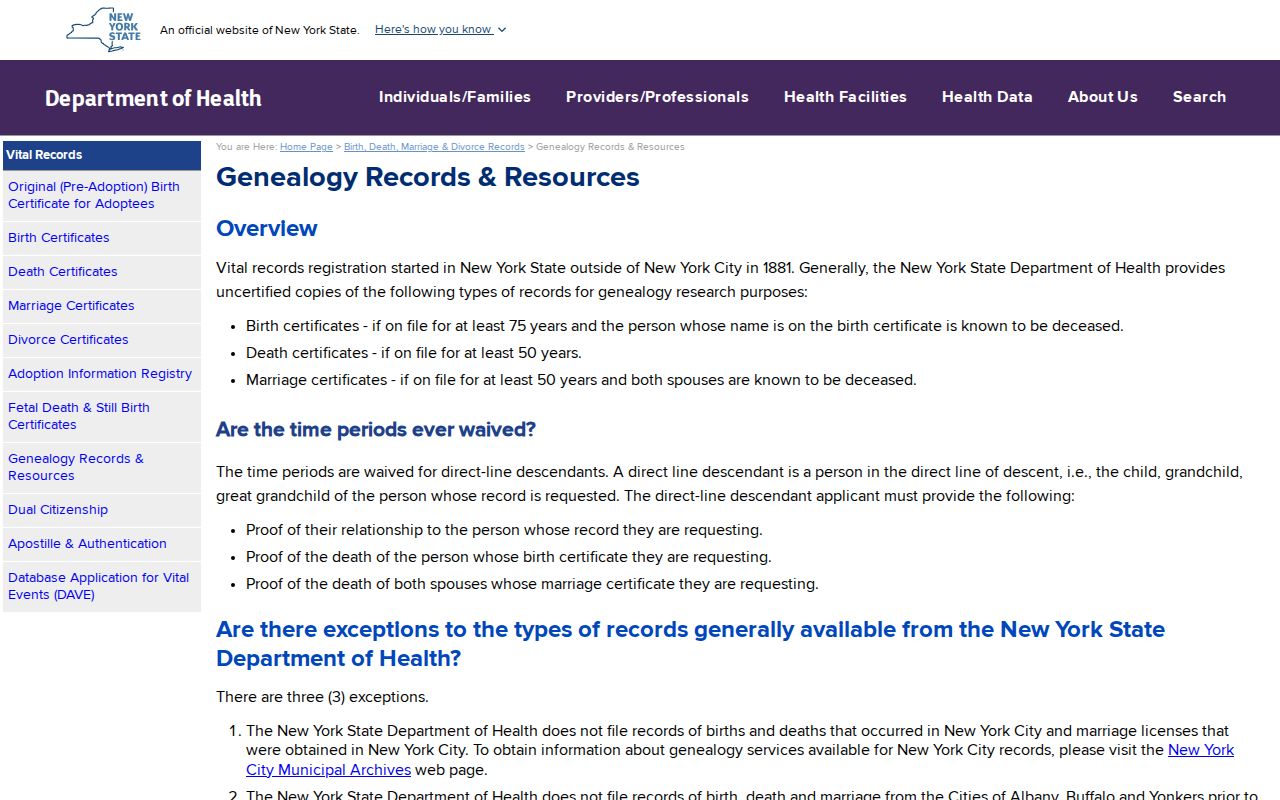
Event year, relationship, and eligibility belong in every request.
Carmel Historical Directory Shelves
Carmel is a town, so the nearest historical directory may be countywide. The bibliographic lead is the 1938–39 Putnam County Directory, published by The Putnam County News. NYGenWeb points to a lookup route. No complete browsable scan exists online, though. The digitized 1931 Putnam County Year Book is easier to inspect, with town, community, official, civic, and commercial material. Cite the page and year with any name.
The County Historian, Reed Memorial Library, Mahopac Public Library, and Putnam History Museum form the practical reference network. Ask each about printed directories and reverse or criss-cross directories. Also ask about yearbooks, local newspapers, obituary indexes, cemetery records, and in-library genealogy databases. No public website lists holdings completely. A librarian's confirmation beats assuming a volume exists. The Town of Carmel staff directory routes department questions.
The Town directory suits public department routing. Historical household research belongs with the collections and source dates named above.
Carmel Archive Years and Gaps
Putnam County was created in 1812. Carmel came first, in 1795. Boundaries shifted over time. Land west of Peekskill Hollow Creek went to Putnam Valley in 1861, and part of northwest Philipstown went to Kent in 1879. An old place name may therefore sit under a different jurisdiction. The County Historian's archive catalog describes more than 200 series and a master index exceeding 125,000 entries, a strong fallback when a current portal stops.
| Period or event | Record implication | Best route |
|---|---|---|
| Before 1812 | A Putnam filing may not exist yet. | Check Dutchess, church, or historic collection context. |
| 1790–1930 census era | Federal microfilm can place a household on enumeration day. | County Historian and library research. |
| 1890 | Federal schedules were destroyed. | Use tax, deed, newspaper, state census, and local sources. |
| Modern online systems | Coverage cutoffs vary and some fields are office-only. | Ask the custodian for counter or archive access. |
Note: SearchIQS historical coverage and the Carmel court e-filing start date are not published in official source material.
When a Carmel Portal Stops
A stalled search rarely means the record is sealed. The Town Archive supports keyword, archive, and date-range queries across its digitized municipal documents. That is often the fastest second stop. Building and code files are different. No public search index covers them. So the Building Department asks for an address or tax map, a rough work date, and a category such as permit, inspection, notice, plan, certificate, or final disposition. The county property page and the Town portal each display only what their own systems currently hold. Treat a empty result as a prompt, not an answer. Retry with a corrected format. Try an alternate postal label, a different year, or a call to the custodian directly.
A Carmel record can exist but not be posted. In that case, New York FOIL under Public Officers Law Article 6, §§84–90 opens the door. An agency normally acknowledges a request inside five business days. It either grants it, denies it, or gives an estimated availability date. Copies up to 9 by 14 inches generally run 25 cents per page. Other media are billed at actual reproduction cost. The County Clerk's online FOIL form requests the department, a clear description, your preferred electronic format, and requester details. Keep the request tight. Name the parcel, record type, and date range instead of asking broadly about a person.
The underlying rolls and parcel data live elsewhere. The Putnam County Real Property page is where property and tax-roll access begins.
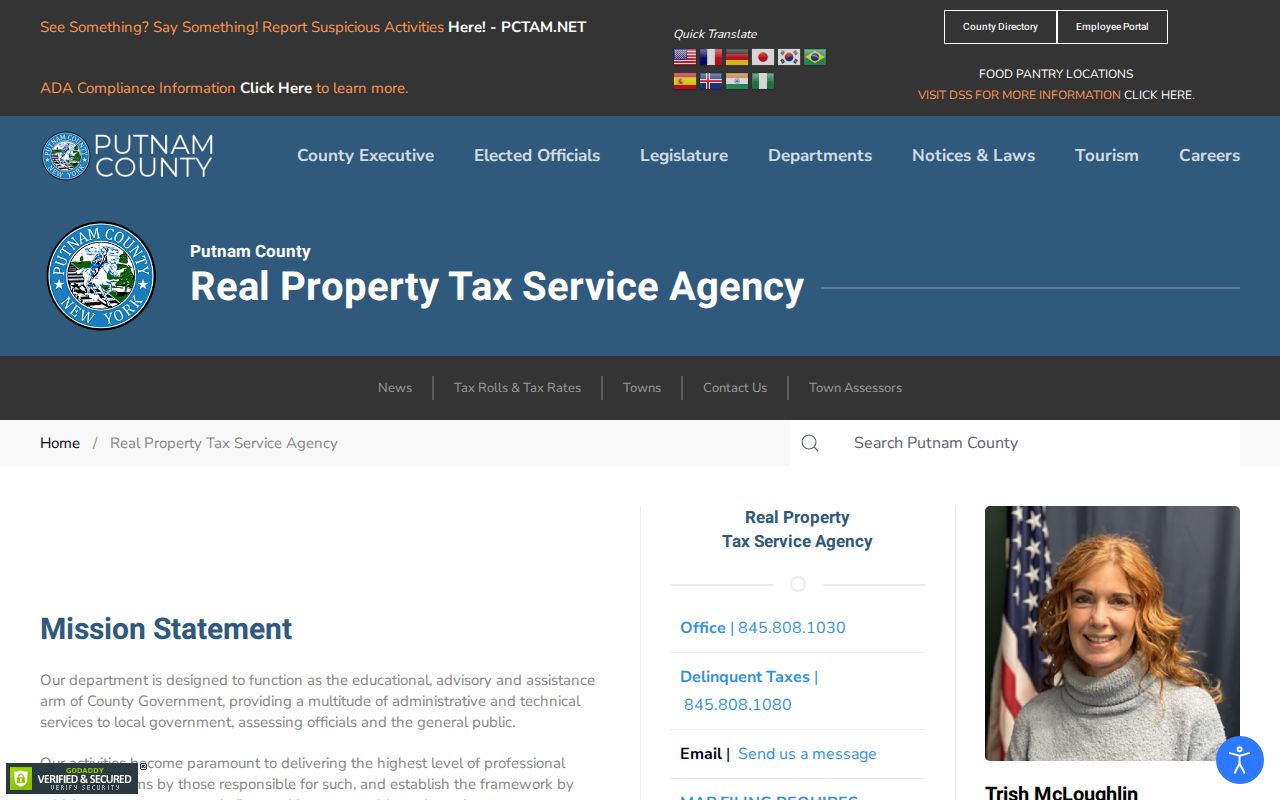
Start any Carmel records request at the county property source. Roll years and parcel records there sharpen the ask before it goes out.
Carmel Record Checks and Scams
Solid record work rests on three habits. Check the source date, keep the original label, and match carefully. Common names make this essential. So do annual property rolls, shifting court statuses, and old publications. On December 4, 2025 the County Clerk warned Carmel residents about deed-copy mailers. Viewing public land records is free at the Clerk's office. A certified deed copy runs $4 plus 50 cents per page. Any unsolicited notice deserves a quick call to the Clerk. That call should come before a company that implies it controls the record gets paid.
The same discipline applies to related claims. New York State's Comptroller runs the unclaimed-funds route. But a name match is only a lead until the agency's claim process confirms it. A dated court item or obituary records an event, not a verdict on anyone. Commercial people-finder listings can merge, age, or misattribute records. They never replace a custodian record or an archive source.
| Official or historical source | Commercial profile category |
|---|---|
| Names a custodian, date, record role, and access route. | May combine public fragments, purchased data, and inferred links. |
| Can be checked against the original record or collection. | May be stale, merged, incomplete, or difficult to correct. |
| Supports a dated, limited conclusion. | Should never replace a source-specific confirmation. |
Personal and lawful use. Carmel records can help with family history, heirs, civic research, or a property question. Never use an address or record trail to stalk, harass, intimidate, or harm another person.
Historical Carmel Resident Directories
A historical residents directory, census schedule, map, or newspaper can anchor a household to a particular year in Carmel. None of them can confirm where someone lives now. Old entries abbreviate given names, list only the householder, or carry a business or hamlet label instead of a modern street number. Try spelling variants, initials, and married names. Try both Carmel and Mahopac labels too. Before linking a directory address to any other record, weigh it against a tax map, deed, census line, or dated newspaper item.
The Carmel city directory reference holds the full collection and a method for reading entries. When you note a find, capture the source title, publication year, the name exactly as printed, the place or address, and the page or image number. Add an uncertainty label. That keeps the record honest about what it actually proves.